


Newsletter Subscribe
Enter your email address below and subscribe to our newsletter

Enter your email address below and subscribe to our newsletter


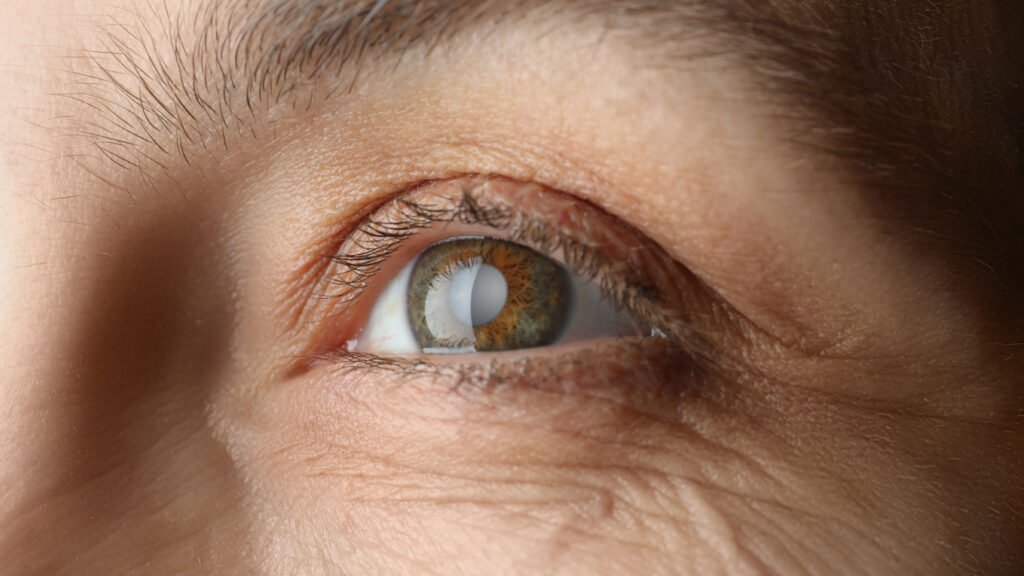
(Image Credit: AdobeStock/ImageFlow)

Artificial intelligence (AI) continues to evolve with improved diagnostic abilities, individualized patient treatments, and enhanced surgical accuracy. Some key developments include the analysis of retinal scans that provide earlier disease detection and the ability to spot tumors on slit-lamp photographs. Another advance is more individualized cataract surgery thus enhancing precision and visual outcomes.
AI currently is at the forefront of ophthalmologists’ minds. When asked about technologic advances in 2025, a recent survey found that ophthalmologists identified AI as by far the “most transformative trend in ophthalmology.”1
The survey found AI to be the clear frontrunner among available technologies, cited by 78% of respondents. The next cited trend, at a distance 11%, was age-related macular degeneration/geographic atrophy treatments in the pipeline.
David Olawade, MPH, and colleagues, conducted areview2 to evaluate the current applications and future potential of AI in ophthalmology. They reported, “One of the most profound impacts of AI in ophthalmology is in the realm of diagnostics. AI systems, particularly those leveraging deep learning techniques such as convolutional neural networks, are adept at recognizing complex patterns in imaging data, which is crucial for diagnosing various eye conditions.3,4” This has impacted the diagnosis of diabetic retinopathy, age-related macular degeneration (AMD), and glaucoma, with more precise diagnosis that equals or exceeds that of human experts, according to the authors.
A press release from the American Academy of Ophthalmology5 highlighted a population-based cohort study conducted by researchers at the University College London Institute of Ophthalmology and Moorfields Eye Hospital, London, that compared the ability of an AI algorithm with a human grader to ferret out cases of glaucoma among 6,304 fundus images.
The investigators reported that patients with glaucoma were correctly identified by the algorithm in 88% to 90% of cases in contrast to the 79% to 81% by human graders.
Precise analyses of ocular scans give ophthalmologists the freedom to adjust follow-up visits and chose the most appropriate treatments.2
As an example, in AMD, “AI-driven models can analyze optical coherence tomography [OCT] images along with clinical data to predict how patients will respond to various treatments, such as anti-vascular endothelial growth factor (anti-VEGF) injections.6-8 Studies have shown that AI can identify patients who are likely to benefit from specific therapies and those who may require alternative treatment strategies.9-11 This capability allows for more targeted and effective interventions, improving patient outcomes and reducing unnecessary treatments,”2 according to Olawade and colleagues.
The real benefits of the technology are in data analysis and recognition of patterns not apparent to humans, thus allowing refinement of predictions and recommendations and that treatment plans are up to date with the latest clinical insights and patient responses.4,10,12
AI models also predict patients at high risk of rapid disease progression who need aggressive treatment.13,14 This can result in better resource allocation, improved quality of care, better patient outcomes, and reduced treatment costs.
AI is also enhancing surgical precision, reducing complications, and improving patient outcomes through robotic-assisted surgery and AI-guided instruments.15-17
In cataract surgery, for example, these advanced technologies provide real-time feedback, assist in creating accurate incisions, and optimize various surgical procedures.17,18 AI-powered robotic systems assist in intricate surgical tasks requiring high accuracy.19,20 A key advantage of robotic-assisted surgery is the reduction of human error.16,21
AI-guided instruments assist surgeons in making precise incisions and accurately positioning implants.15,22 AI algorithms can analyze intraoperative data, such as imaging and sensor information, to provide surgeons with critical insights,17,20 and help identify optimal incision sites, avoid critical structures, and ensure proper alignment of surgical instruments.
AI algorithms can markedly impact clinical trials by identifying eligible patients rapidly and accelerating the recruiting of those patients. AI also can streamline the trials by decreasing the numbers of patients needed and the timelines involved.
“Clinical trial recruitment is a crucial step in medical research that often faces significant obstacles. Statistics reveal that around 80% of clinical trials fail to enroll participants on time, leading to delays that can extend the timelines by several months or even years. This is particularly concerning in disease areas needing urgent solutions, such as cancer or Alzheimer’s, where time is of the essence. The average time for recruitment is approximately 20% of the total trial duration, highlighting the inefficiency in current practices,”23 according to a report from Scientific Research in Hospital Solutions.
AI can identify suitable candidates more quickly, which reduces recruitment timelines and improves quality of trial participation, thus enhancing efficiency as well as paving the way for more effective treatment discoveries.23
“AI has emerged as a promising tool to enhance and accelerate the drug discovery process. AI encompasses a range of machine learning and deep learning techniques capable of analyzing vast datasets, identifying complex patterns, and generating predictive models. These capabilities are particularly valuable in drug discovery, where AI models can optimize molecular design, predict pharmacokinetic properties, and streamline clinical trial processes. Recent advances in AI-driven drug discovery have demonstrated its ability to significantly accelerate drug development timelines,”24 according to Cheng and colleagues.
Use of AI can cut the early-stage development time of drugs by over 60% and increase the likelihood of clinical success, particularly of protein-based drugs, by improving the accuracy of efficacy, safety, and manufacturability predictions.25 In addition, large language models and vision-language models have introduced a new level of capability, which allows AI to generate novel molecular structures, predict drug-target interactions, and analyze vast biomedical literature at an unprecedented scale.26 These models not only enhance scientific research but also improve decision-making in early-stage drug development, clinical trial design, and biomarker identification.27,28
Cheng and colleagues also pointed out that AI can rapidly identify and validate new drug targets, optimize lead compounds, and predict pharmacokinetics, pharmacodynamics, and toxicity. AI-assisted multi-modal ocular biomarkers may improve treatment monitoring and support personalized medicine. Integrating AI shortens development timelines, enhances efficiency, reduces costs, and increases the success rate of new drugs.24
The challenges that remain are the implementation of standardized regulations for AI in ocular drug development. These are urgent needs that ensure safe and equitable implementation,24 Cheng and colleagues emphasized.
“AI has a huge potential to transform drug discovery and development, offering groundbreaking opportunities in molecular drug target identification, preclinical and clinical testing, and drug repurposing. However, the ethical and societal complexities inherent in this technology necessitate careful and deliberate strategies to fully leverage its benefits.29 As AI continues to evolve, it is essential to stay informed about emerging developments and implement responsible practices to ensure equitable benefits for all patients,29” they concluded.
Source: www.ophthalmologytimes.com
Author: | Date: 2025-12-23 11:00:00