

Newsletter Subscribe
Enter your email address below and subscribe to our newsletter

Enter your email address below and subscribe to our newsletter
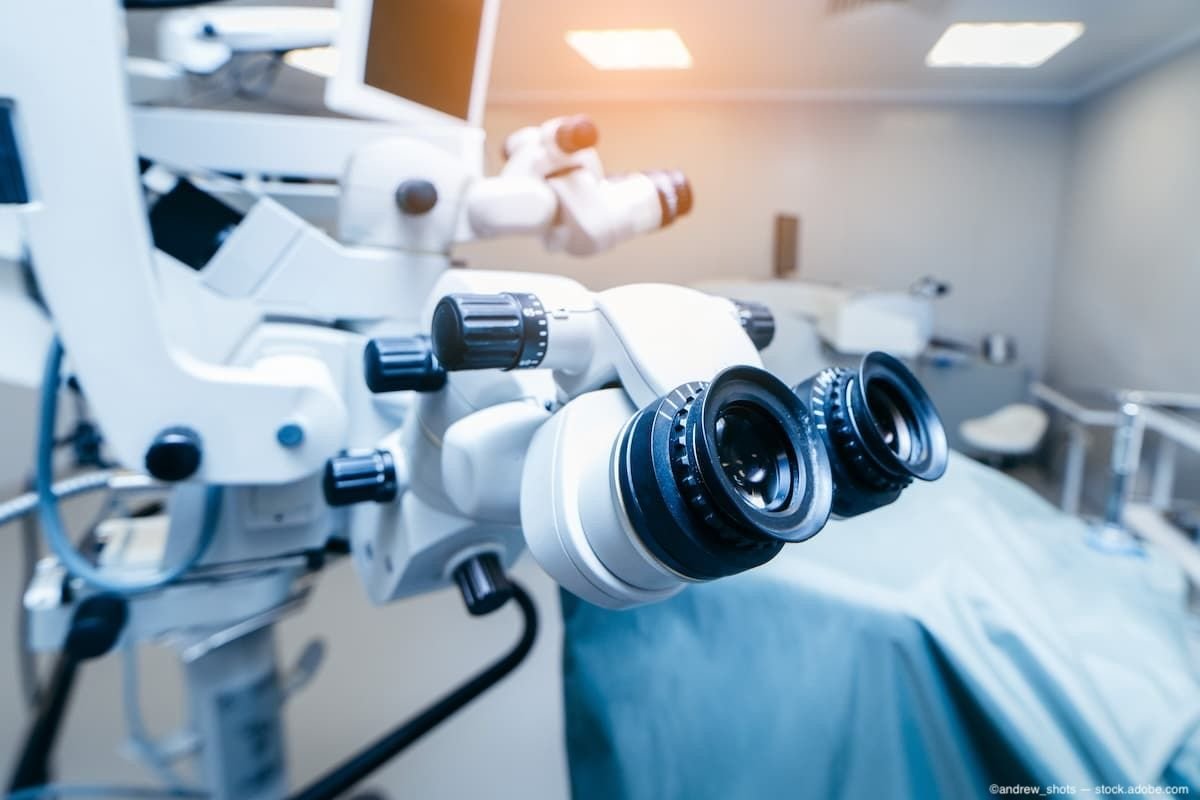
(Image Credit: AdobeStock/andrew_shots)
AAO 2025 showcased a powerful convergence of innovation in glaucoma care, emphasizing safer long-term pressure control, improved visualization technologies, and more individualized lens decision-making for complex patients. Presentations by Inder Paul Singh, MD; Sahar Bedrood, MD, PhD; and John Berdahl, MD, offered a unified picture of where glaucoma is headed: toward safer procedures, smarter device integration, and more tailored surgical strategies.
Singh’s presentation stood out for its real-world clarity: combining cataract surgery with the travoprost intracameral iDose implant provides predictable intraocular pressure (IOP) reduction with impressive safety.
His cohort of patients—whose baseline IOP averaged 25 mm Hg off drops—experienced an 11 mm Hg reduction at 12 months, with 98% achieving ≥20% pressure reduction and over 96% maintaining pressures below the crucial 18 mm Hg mark. Almost all remained drop-free, relieving a long-standing burden of adherence, cost, and ocular surface disease.
Equally important was the safety profile. Singh reported no significant cystoid macular edema, no chronic inflammation, and no prostaglandin-associated surgical complications. A standard cataract steroid taper was sufficient—a major advantage over treatments needing intensified postoperative care.
A key message was accessibility. The iDose procedure integrates seamlessly into cataract workflows, requiring none of the advanced angle navigation needed for certain MIGS. This allows a larger group of surgeons to adopt sustained-release prostaglandin therapy, lowering IOP from inside the eye rather than relying on variable topical adherence.
Where Singh emphasized drug-device synergy, Sahar Bedrood, MD, highlighted a different frontier: enhanced visualization for endoscopic cyclophotocoagulation (ECP) using the new Leos endoscopic laser system.
Her message was straightforward and compelling: she had never seen the ciliary body with such clarity.
Unlike older scopes, the Leos system provides:
This clarity translates directly to safer, more precise energy application. Bedrood noted that the improved view allows her to use lower energy while achieving more effective tissue treatment—potentially a game-changing shift in both clinical outcome and patient comfort.
In early cases, she saw reduced inflammation and strong pressure-lowering results. The device’s ease of use—“one button, one click”—earned praise from OR staff, removing a long-standing workflow barrier associated with older, more finicky endoscopes.
John Berdahl, MD, connected glaucoma care with a critical cataract consideration: implanting premium IOLs in pseudoexfoliation patients. These individuals present unique risks due to zonular weakness, variable pupil behavior, and the frequent co-existence of glaucoma.
Berdahl emphasized several surgical imperatives:
While toric lenses remain safe and beneficial, multifocal and EDOF IOLs demand careful consideration. Mild glaucoma typically poses minimal visual compromise, but moderate glaucoma changes the equation, as contrast loss from the disease can stack unfavorably with IOL optics.
His overarching point: pseudoexfoliation patients can benefit from advanced lenses, but only through a highly individualized, risk-adjusted approach that accounts for long-term visual function—not just short-term acuity.
Taken together, these three presentations paint a clear picture of the future of glaucoma care:
From medication-independent pressure control to enhanced surgical precision and tailored IOL planning, AAO 2025 signaled a maturing field moving toward durability, predictability, and personalization.
Source: www.ophthalmologytimes.com
Author: | Date: 2025-11-26 11:00:00