




Newsletter Subscribe
Enter your email address below and subscribe to our newsletter

Enter your email address below and subscribe to our newsletter

Dr. Rajendra Apte, MD, PhD, has been honored with the Research to Prevent Blindness (RPB)/American Macular Degeneration Foundation (AMDF) Catalyst Award for Innovative Research Approaches for Age-Related Macular Degeneration (AMD). This award, amounting to $300,000, underscores Dr. Apte’s dedication and…

The MACUSTAR consortium, led by the Department of Ophthalmology at the University Hospital Bonn (UKB), is extending its Europe-wide clinical study on age-related macular degeneration (AMD). The primary focus of the extension is to garner further insights into the intermediate…

Tarsus Pharmaceuticals has received FDA approval for XDEMVY(TM) (lotilaner ophthalmic solution) 0.25% to treat Demodex blepharitis, making it the first and only FDA-approved treatment directly targeting Demodex mites, the underlying cause of the condition. The approval was based on the…

In a recent study published in Nature Communications, researchers from Mass Eye and Ear, led by Ayellet Segrè, Ph.D., alongside Janey Wiggs, MD, Ph.D., conducted an extensive investigation that merged findings from a large cross-ancestry genome-wide association study meta-analysis of…
Lupin Limited announced the launch of Bromfenac Ophthalmic Solution, 0.075%. The product has received the green light from the United States Food and Drug Administration (U.S. FDA), marking a crucial milestone for the company’s expansion in the American pharmaceutical market.…

The European Society of Cataract and Refractive Surgeons (ESCRS) has commenced its highly anticipated Winter Meeting in Frankfurt, Germany. The event, which runs from February 15th to 18th, 2024, promises to be a hub of innovation and knowledge exchange in…

Opthea has reached a significant milestone in its quest to combat wet age-related macular degeneration (AMD) with the completion of patient enrollment in the COAST phase 3 pivotal clinical trial. The trial investigates sozinibercept (OPT-302), a promising vascular endothelial growth…
VSY Biotechnology GmbH is pushing the boundaries of ophthalmology with its cutting-edge 100% Glistening-Free IOL Material. In a statement, Andreas Kühnel, the Managing Director at VSY Biotechnology GmbH, expressed his excitement about the groundbreaking innovation, saying, “This innovative solution, developed…
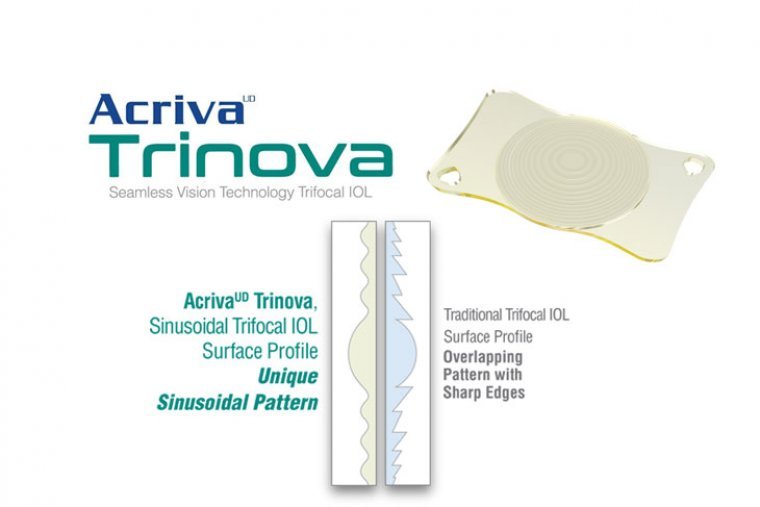
AcrivaUD Trinova is the world’s first and only sinusoidal trifocal IOL manufactured with Sinusoidal Vision Technology (SVT). Its sinusoidal optic design eliminates the sharp steps (diffractive rings) found with traditional trifocal IOLs. The smoothly varying surface profile derived from the…
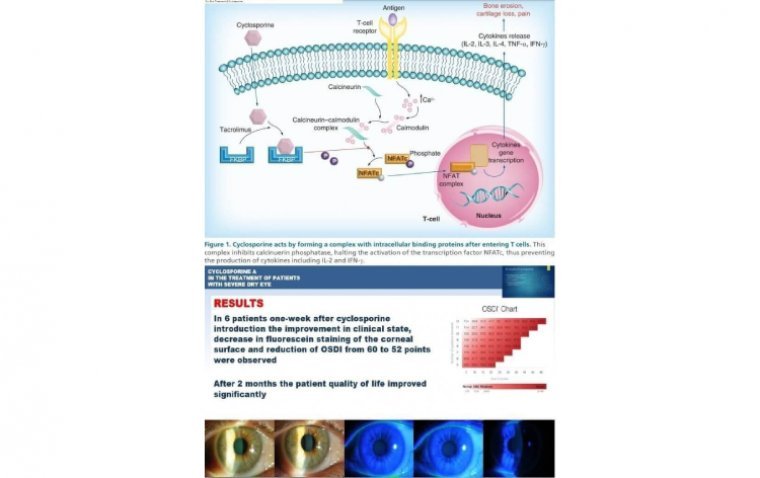
Dry eye disease (DED), also known as keratoconjunctivitis sicca (KCS), is a common disorder of the eye affecting millions of people around the world. The prevalence of DED ranges from 5% to 33% worldwide with increased prevalence among adult women…