

Newsletter Subscribe
Enter your email address below and subscribe to our newsletter

Enter your email address below and subscribe to our newsletter
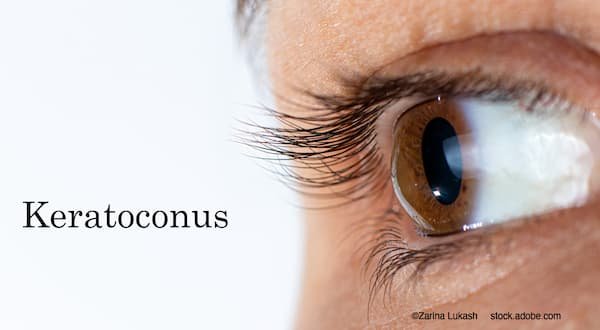
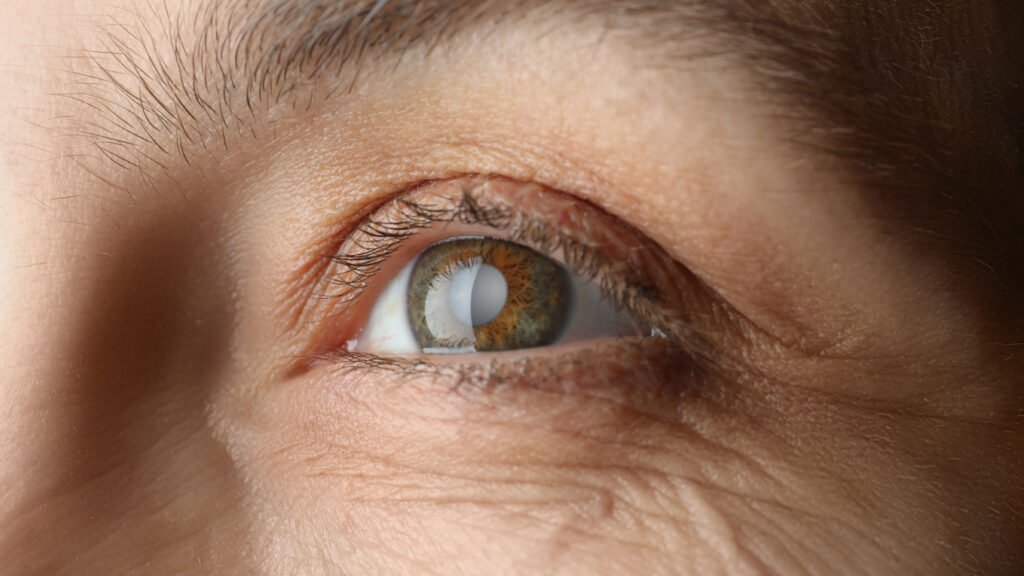
The FDA-approved, incision-free Epioxa therapy is changing the landscape of keratoconus care, explains Gloria B. Chiu, OD, FAAO, FSLS. (Image credit: AdobeStock/Zarina Lukash)
Glaukos recently obtained FDA clearance for Epioxa, a topical, incision-free therapy for keratoconus that preserves the corneal epithelium.1 The treatment uses 2 sequential oxygen-enriched formulations—Epioxa HD and Epioxa—activated with UV light to slow or stop disease progression, according to the company.1
Keratoconus is a progressive disorder of the cornea, typically identified in patients under 30, which can lead to corneal thinning, weakening, and visual impairment, sometimes necessitating corneal transplantation.1
BREAKING NEWS:
The FDA’s approval was based on results from two Phase 3 pivotal trials including more than 400 patients, demonstrating safety, tolerability, and achievement of primary efficacy endpoints.1,2 By avoiding removal of the epithelium, this topical, incision-free therapy offers a less invasive alternative to conventional cross-linking, improving patient comfort and recovery.1 Glaukos anticipates commercial availability in early 2026.1
To explore how this novel therapy may influence keratoconus management and support patients earlier in the disease course, the Eye Care Network spoke with Gloria B. Chiu, OD, FAAO, FSLS, who serves as associate professor of clinical ophthalmology, USC Roski Eye Institute, Keck Medicine of USC, Los Angeles, CA; and adjunct faculty, Southern California College of Optometry in Fullerton, CA.
Note: Transcript edited lightly for clarity and lengthy.

(Courtesy of USC Roski Eye Institute)

Gloria B. Chiu, OD, FAAO, FSLS: The recent FDA-approval of Epioxa is significant. While the currently available FDA-approved epi-off cross-linking procedure is certainly effective in halting progressive keratoconus, the epithelium-off requirement does contribute to discomfort during the healing process and can be a source for adverse effects.
Given that Epioxa is an incision-free therapy, enhanced with oxygen delivery through the O2n System and Boost Googles, we expect to see similar results in slowing keratoconus progression, but with less irritation and quicker recovery. This is a win-win for both providers and patients.
Chiu: I don’t believe that there will be much hesitation from eye care providers in accepting this new epi-on protocol, which has already demonstrated efficacy and safety in both Phase 3 clinical trials, and involves a less-invasive protocol to achieve endpoints.
However, I do think that there will be some maneuvering and persistence required to get all the new equipment and pharmaceutical agents into clinics that will offer Epioxa. I am hoping for a smooth transition from utilization of the epi-off system to the newly approved epi-on system, both in terms of the physical devices and supplies required, as well as insurance coverage for patients. If insurances do not promptly adopt and cover this newly approved treatment, it may be more challenging for clinics to offer Epioxa.
Chiu: This novel therapy should open doors for more patients with keratoconus to receive a treatment that will slow or halt their keratoconus progression.
Advancements with this new therapy include a less-invasive technique, which allows for preservation of the corneal epithelium, and likely a shorter recovery time. This will improve comfort during the procedure and healing process and allow patients to return to their activities of daily living sooner.
Source: www.ophthalmologytimes.com
Author: | Date: 2025-10-24 14:25:00