



Newsletter Subscribe
Enter your email address below and subscribe to our newsletter

Enter your email address below and subscribe to our newsletter


Variations in parental leave policies in ophthalmology residencies can affect residents and patient care, underscoring the need for standardized support. (Image credit: AdobeStock/Flamingo Images)

Balancing the demands of medical training with parenthood remains a challenge for many residents, particularly in surgical specialties like ophthalmology. Rishika Garg, a second-year medical student at the University of Oklahoma (OU) College of Medicine in Oklahoma City, recently presented findings from a nationwide analysis examining how maternity and parental leave policies vary across ophthalmology residency programs.1
In this Q&A, the Eye Care Network speaks with Garg about what the research uncovered, how policy gaps affect residents and patient care, and why greater standardization and support are essential for the future of medical training.
Note: Transcript edited for clarity and length.
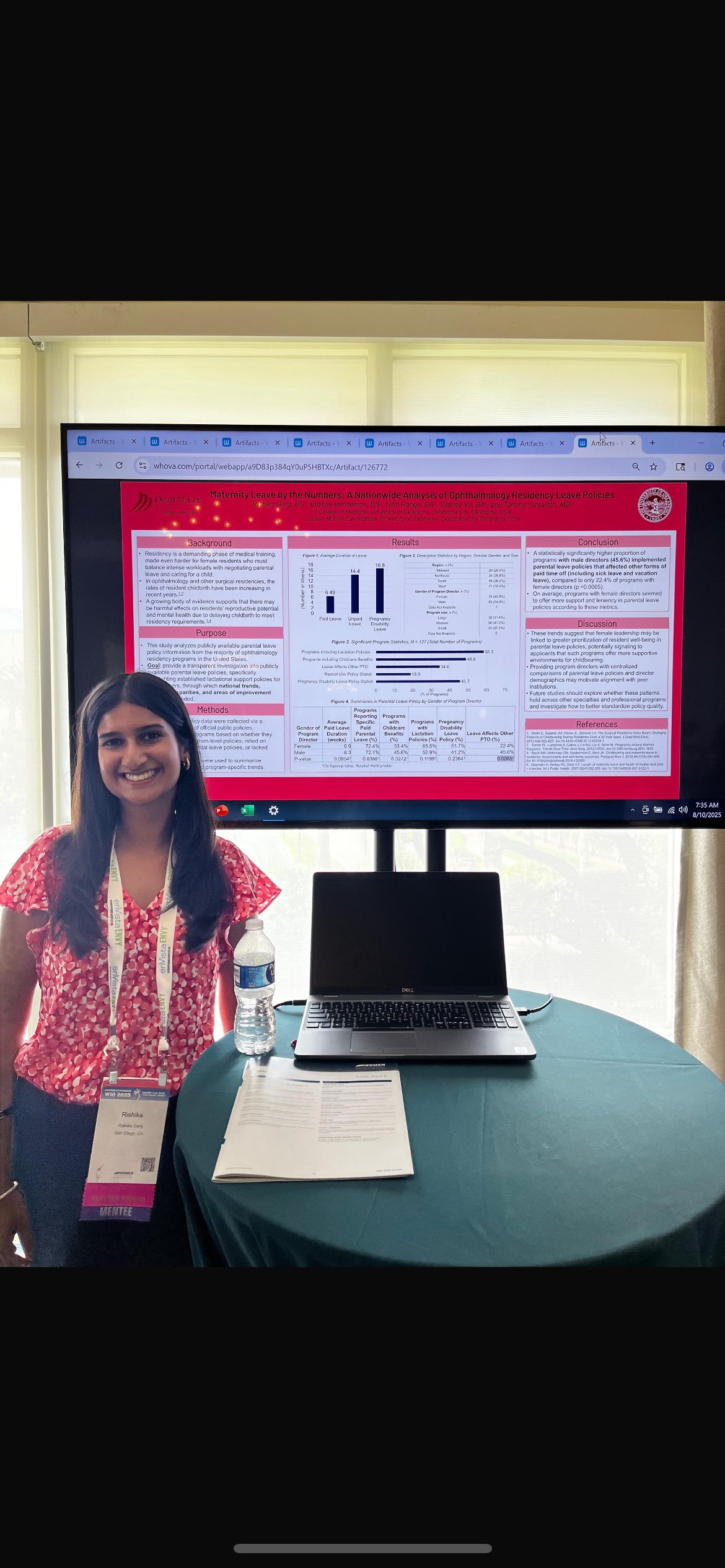
(Courtesy of Rishika Garg)
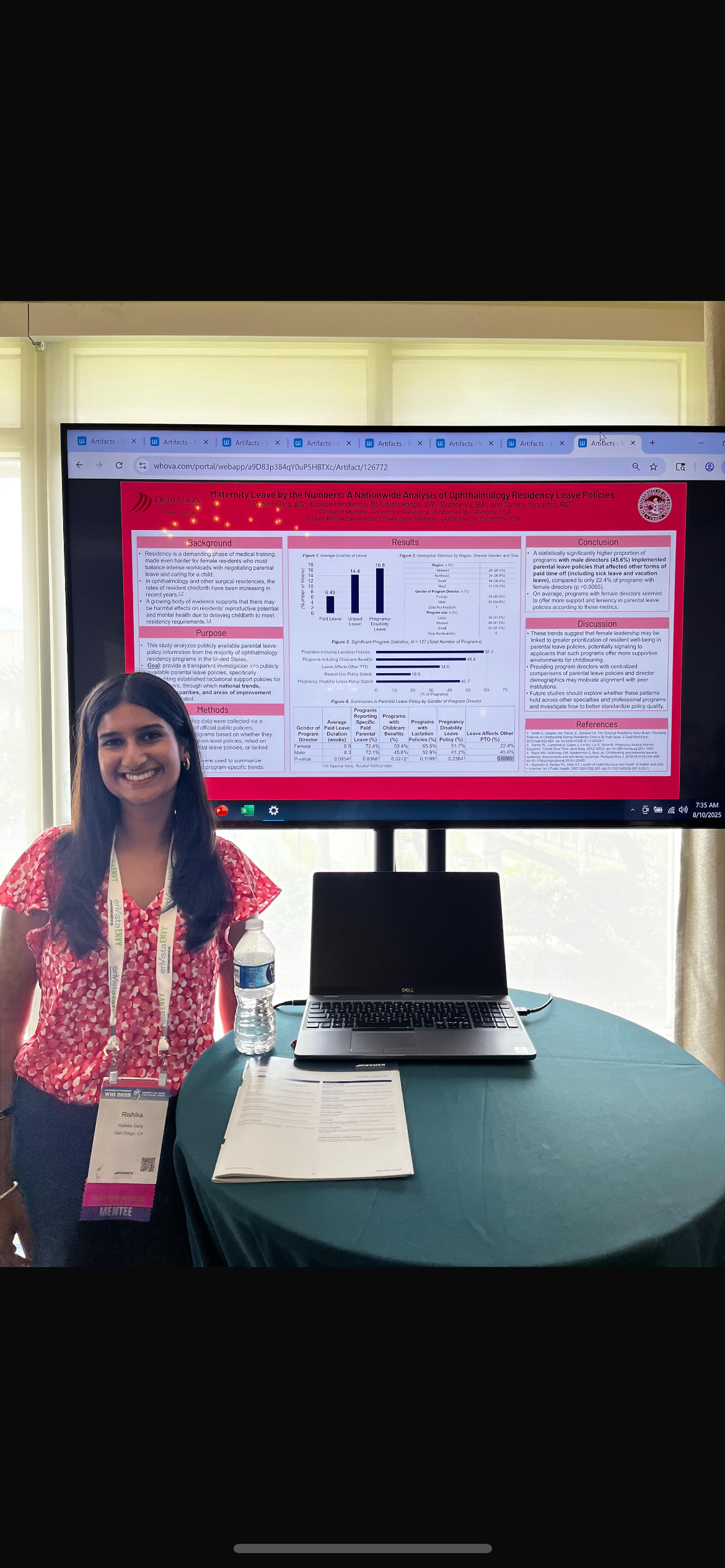
Garg: We found that parental leave policies in ophthalmology residency programs lack uniformity. Some programs have clear, supportive structures in place, while others either demonstrate a gap in formal policies or offer very limited leave. This inconsistency matters because it directly shapes residents’ experiences, their ability to balance training with family life, and ultimately their well-being. Our findings highlight the need for more clarity and consistency, not just for residents who become parents but also for the colleagues and patients who are affected by these policies.
Garg: This idea was actually brought up by Sydney Vu (a fourth-year medical student at OU College of Medicine) and Nitin Rangu (a third-year medical student).1 Nitin, Emiline Henderson, and I are interested in pursuing ophthalmology, and realized that these are policies we may personally encounter in our future, so there was both a professional and a personal motivation. Once we began, we also saw how little information was out there, especially across different specialties, which made the project feel even more necessary. All 4 of us have been working on collecting data on these policies, as well as expanding it to different specialties where data on maternity leave policies may be lacking.
Garg: What surprised me most was the wide variation in policies. Some programs offer up to 12 weeks and provide supportive measures, such as financial assistance for childcare and protective lactation policies, while others provide only the minimum and may deduct from other leave types, such as sick or holiday PTO, which can feel almost punitive. Other programs lacked a written publicly available policy altogether. There were also differences by region and even by the gender of the program director, which suggests that leadership perspective may play a role in shaping policy.
Garg: When policies are unclear or unsupportive, residents are left to navigate incredibly stressful situations without guidance. That uncertainty affects not only their work-life balance but also their sense of belonging in a program. On the other hand, supportive policies can ease transitions, reduce burnout, and improve morale, which in turn leads to better patient care. A resident who feels supported is much more likely to thrive and provide excellent care to their patients.
Garg: Yes, the gaps were made clear. Some residents have the benefit of structured policies while others are left to negotiate leave on an individual basis. The biggest challenge is that residency programs vary so much in size, patient volume, and institutional culture. There is also the tension between meeting training requirements and supporting residents as parents. Finding a balance between these competing pressures is not simple, but the inequities we found suggest that greater standardization is needed.
Garg: I would emphasize that maternity leave is not just a personal issue for residents; it is a systemic issue that affects the culture of training and the quality of care that patients receive. Normalizing parenthood within residency and creating supportive structures benefits everyone. It signals to future trainees that medicine can accommodate both professional excellence and family life, which is crucial for the sustainability of this field.
Source: www.ophthalmologytimes.com
Author: | Date: 2025-11-12 19:00:00